
by Lynn Woods
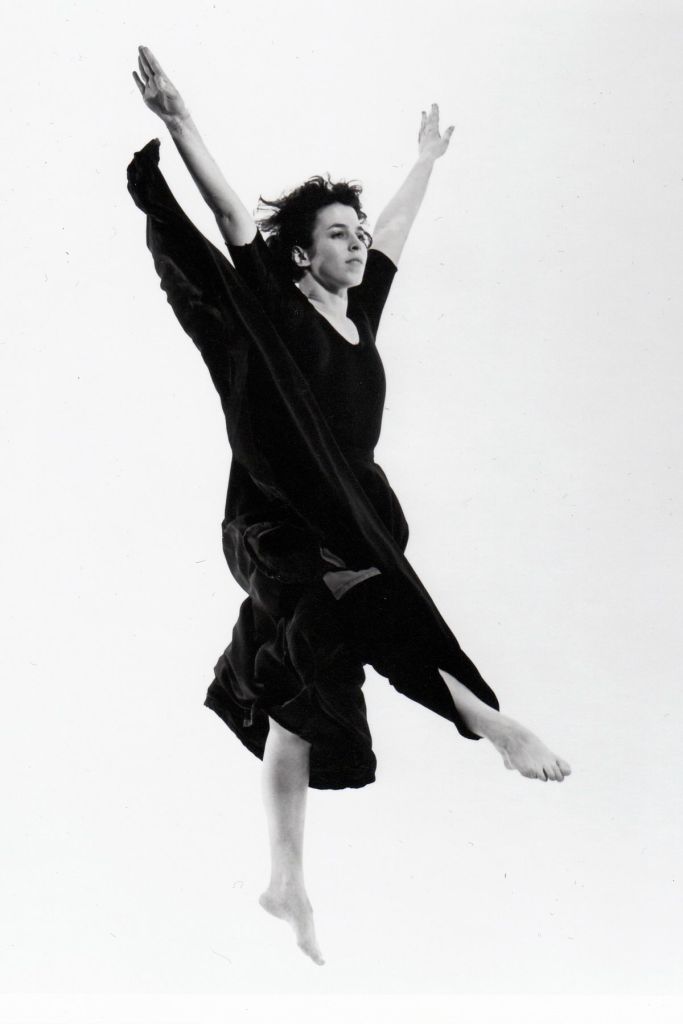
As a New York City-based Pilates teacher and former dancer and choreographer, Lesley A. Powell has a deep connection with the movement of the body. In 2016, after establishing a large studio in the attic of the Victorian house in Fleischmanns she shares with her brother and fellow Longyear Gallery member, Alan Powell, she began painting in earnest, and not surprisingly one of her favorite subjects has been bodies in motion.
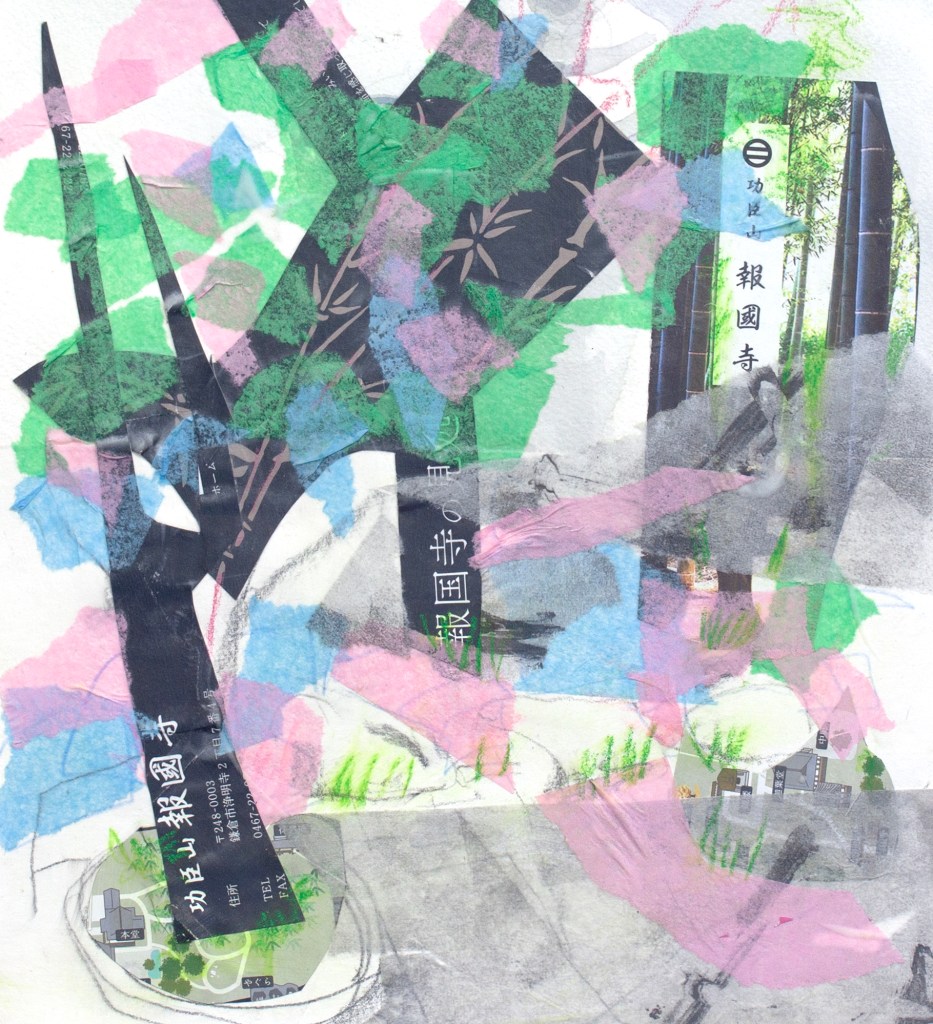
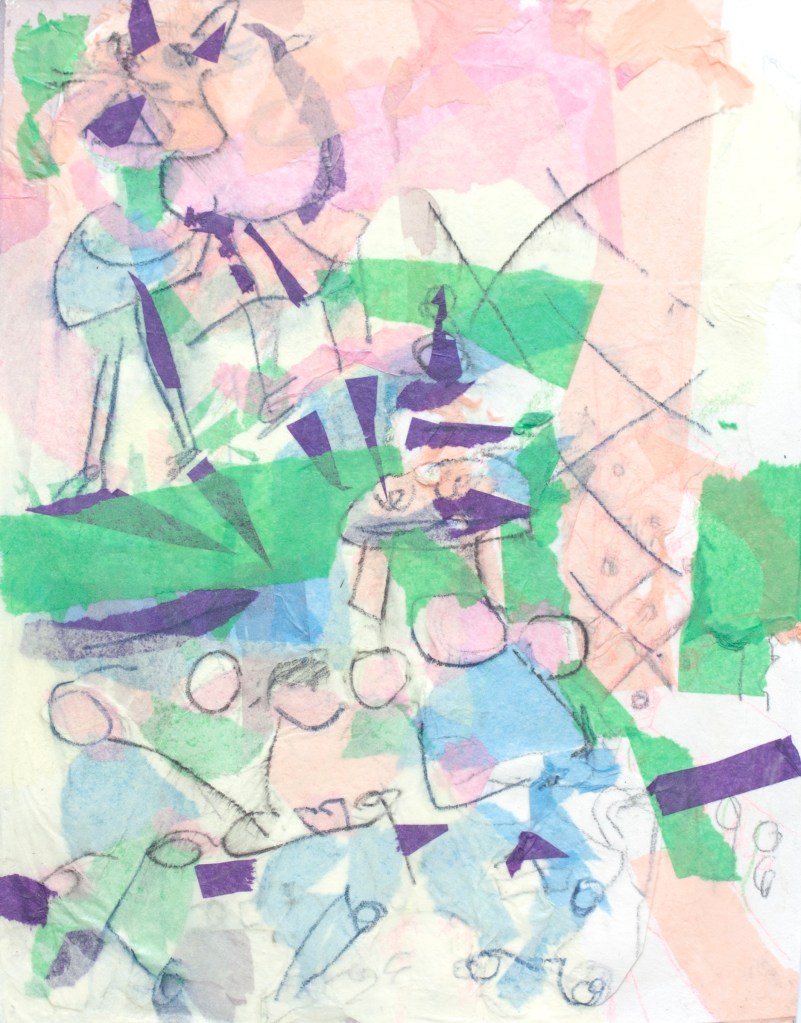
Her current solo show at Longyear Gallery, entitled “Jux Ta Position,” further explores the theme, albeit mainly in the medium of collage. “Sometimes I’m too even with paint, and doing the collages freed me,” she says. Lesley experimented by layering her paintings in watercolor and acrylic with tissue paper; in other pieces, she printed photographs of her figure drawings on rice paper and built up the image with oil pastel, tissue, ribbons and acrylic paint or encaustic.
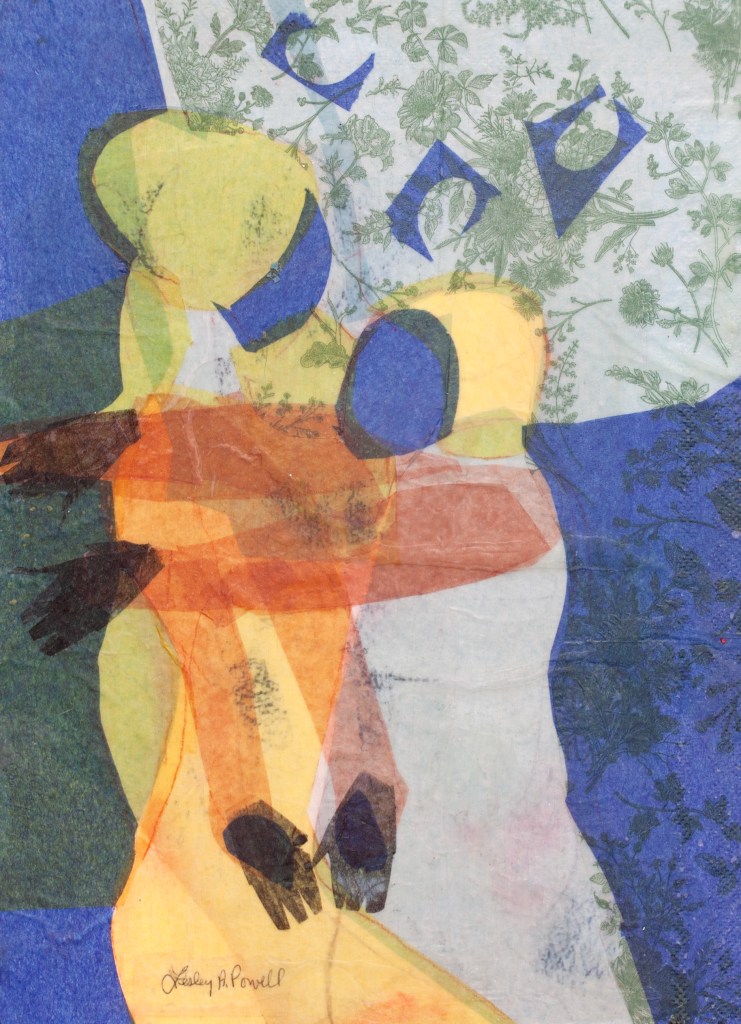
The resulting beautiful transparencies of her fragmented color shapes suggest a space that is rich with subtle tonalities, like prismatic ocean depths. Some of her compositions, with their angled or curved gravity-defying figures, suggest the frenetic energies of German Expressionism; I was also reminded of the early 20th-century watercolors of circus performers and Berlin nightlife by American artist Charles Demuth. It’s as if she had channeled the spirit of dance into her very process.
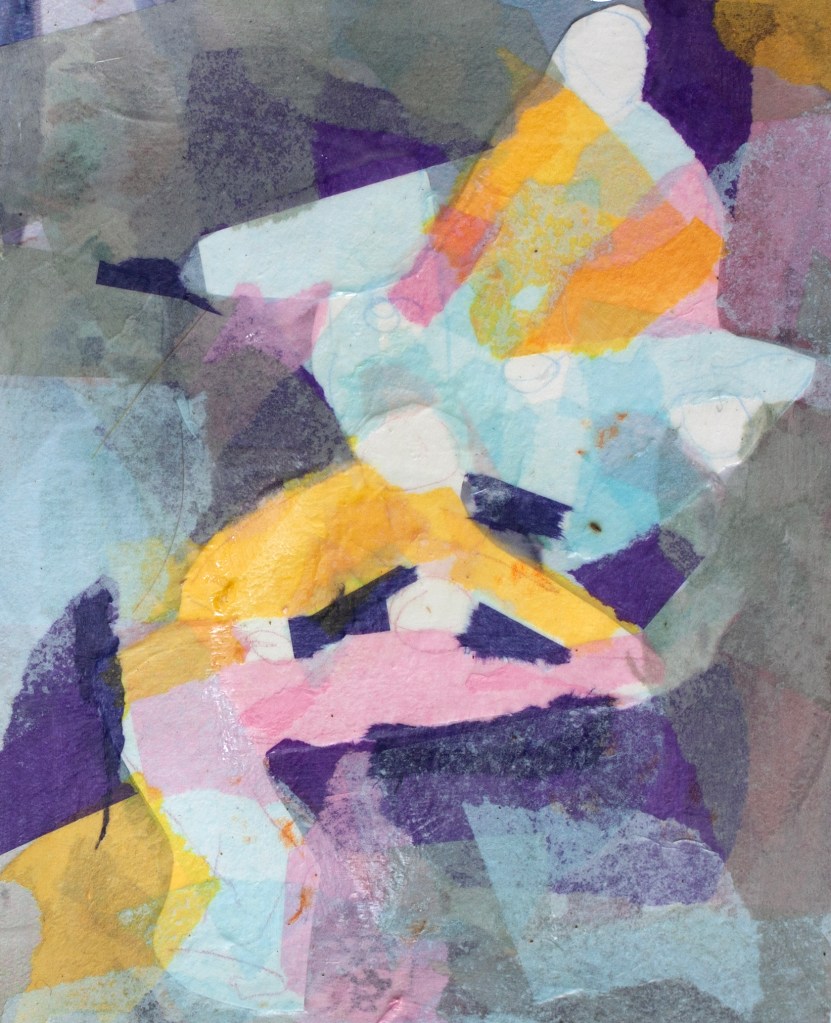
Some of her figures are derived from drawings made at her Pilates studio, others from quick life-drawing sessions, in which she drew two models at once. Yet another inspiration was cowboys riding a mechanical bull: these two pieces are infused with violence, the thrown bodies perhaps alluding to one’s sense of political despair and rage, a shift from the otherwise lyrical tone of her work. There are also scenes of gardens and temples observed on her recent travels to Japan and Nepal as well as in Central Park. An oil painting of a large striped cat meowing at a group of people seated on a bench in the foreground is cartoony, almost comical—it was inspired by a temple Lesley visited in Katmandu– while the image of a floating figure in a pool derived from her forced stay at her hotel in Katmandu due to the riots.
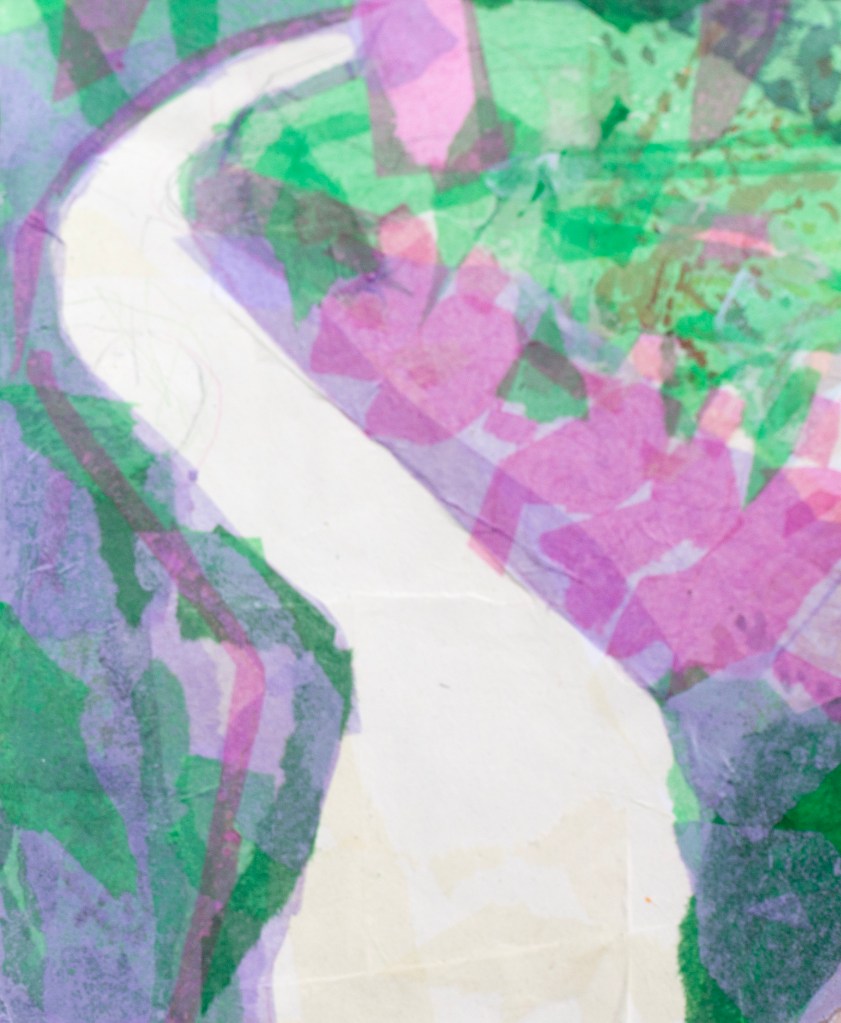
There are Hindu goddesses; purple figures seated on a bench along a winding white path, merging into the delicious green shade of Central Park; a delicate depiction of a Japanese bamboo garden; flags strung over the head of two yellow deities; and twin girls kicking soccer balls in a field described as a patchwork of subtle greens, blues, and dull pinks, the line of dark evergreens in the background indicating this is home, the Catskills. Lesley says she usually limits her palette to three colors, delicately mixing them to achieve her Klee-like gorgeous harmonies.
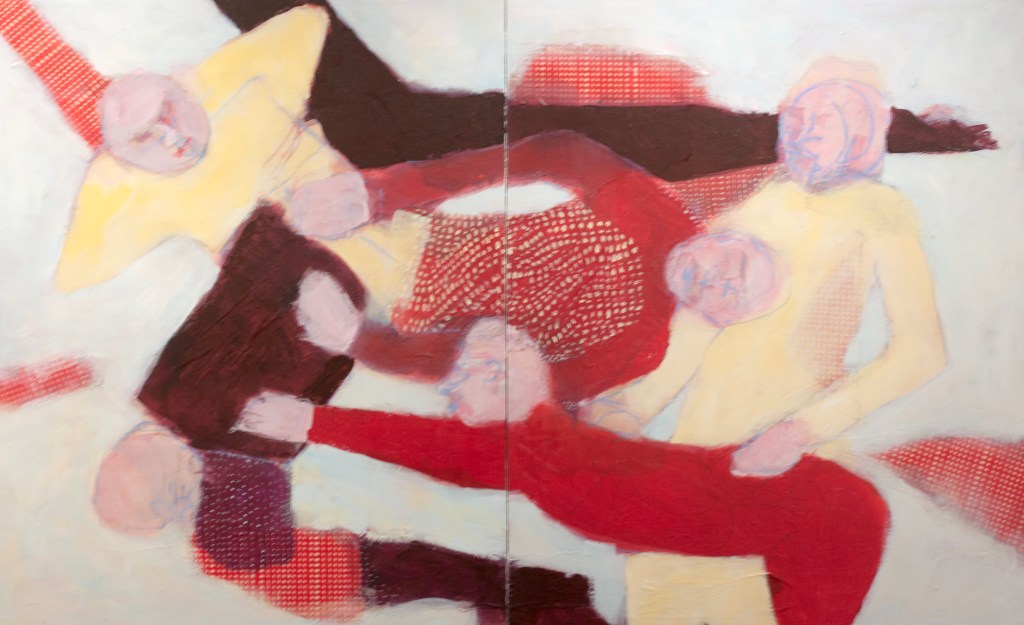
Two anomalies in the show are the large oil diptych of groping figures, entitled “Hands On/Off?”
and
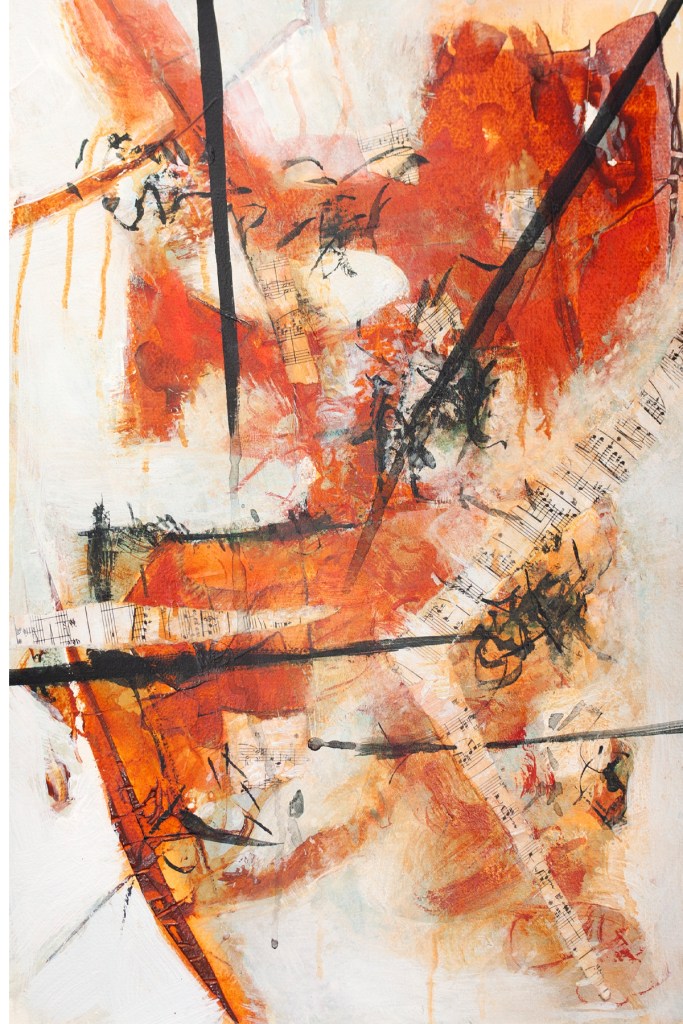
“Notes within a Space,” an abstract composition of acrylic paint layered with scraps of a musical score and accented with a few emphatic black lines. It’s both stark and ethereal, comprised of a figure that both stands out from and merges into the ground, which was conceived in part by turning the paper around, a technique Lesley learned at a workshop in New Orleans with Joan Fullerton.
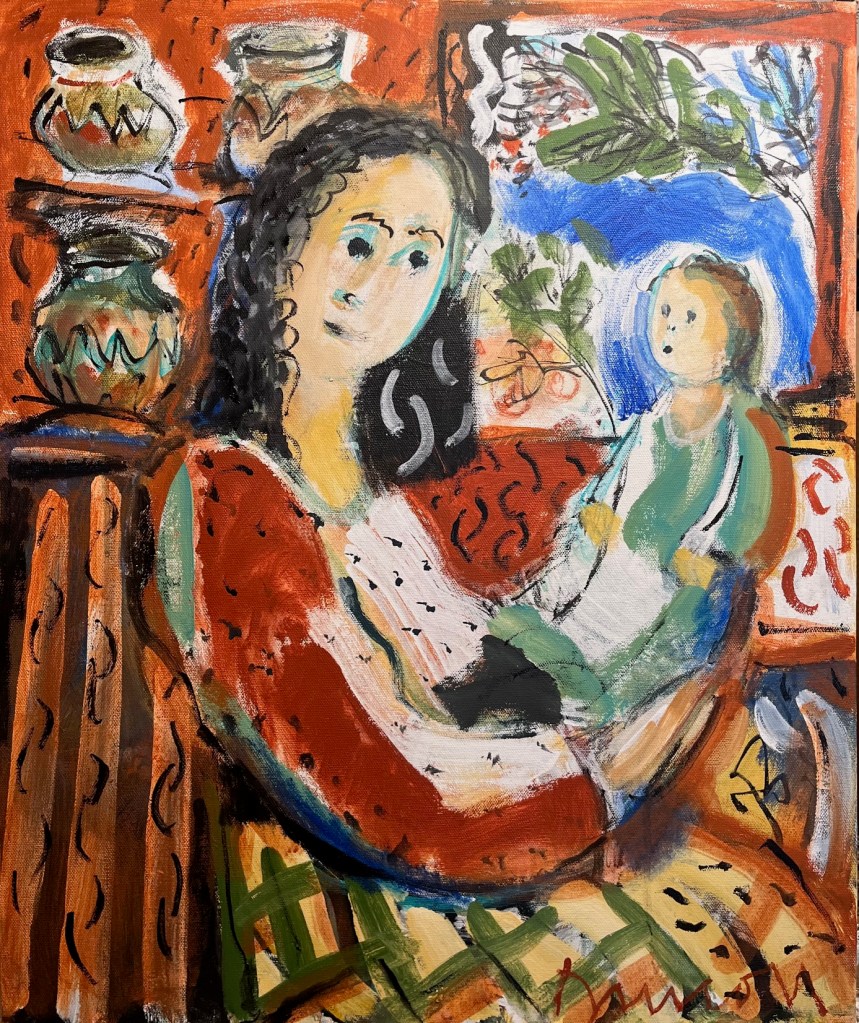
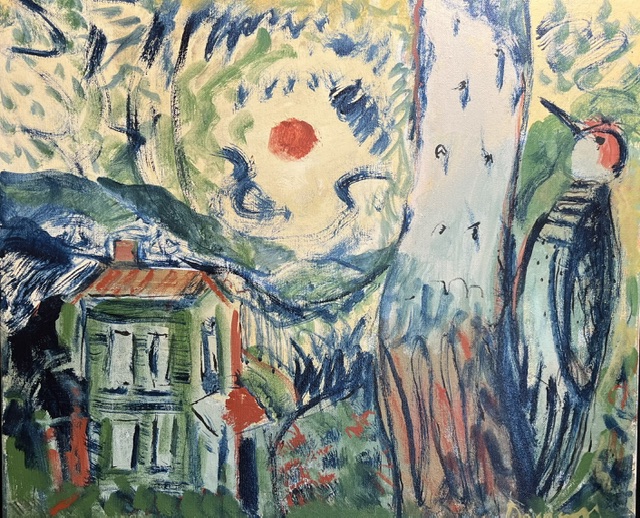
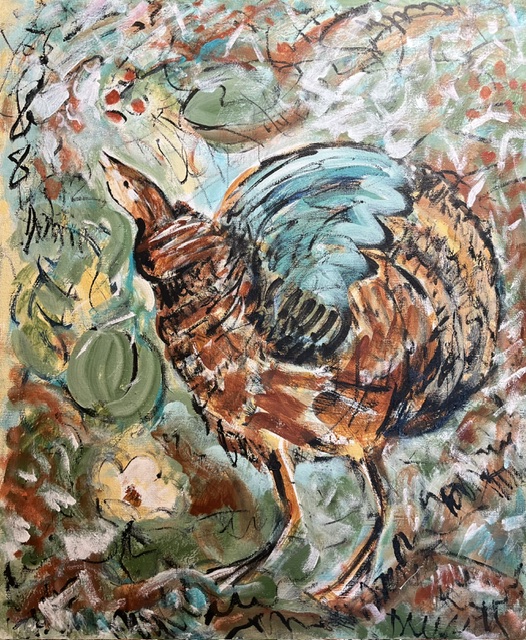
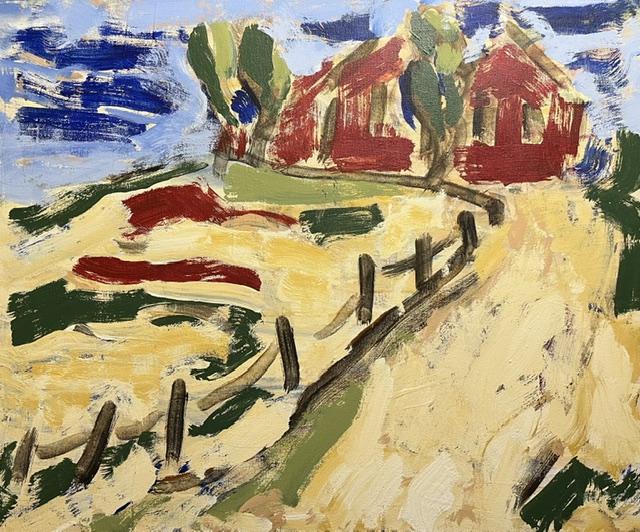
Neil Driscoll’s solo exhibition, “57 New Paintings,” consists of mostly 24 x 20” acrylic paintings hung salon-style in the back gallery. Produced over the past eight months, each work started with a thumbnail sketch, which the artist would loosely transfer onto the canvas as he decided the color scheme and what size brush to use. He painted them quickly, some within an hour, others within two to three hours, and if not satisfied with the result, would paint over an area and rework it. “I look at art history books a lot,” he says. “I also might be outside and see the sun going down and then paint it from memory.” There are echoes of Chagall, Picasso, German Expressionism, and Paul Klee in the pieces. A landscape in which a fence cuts a diagonal leading the eye to a house on a hill suggests vast space, a space the viewer can mentally enter, with the utmost economy. “I like the German painters from the 1920s and 30s for the reason that they reduced the landscape to a simple house on a hill and blue sky,” he says.
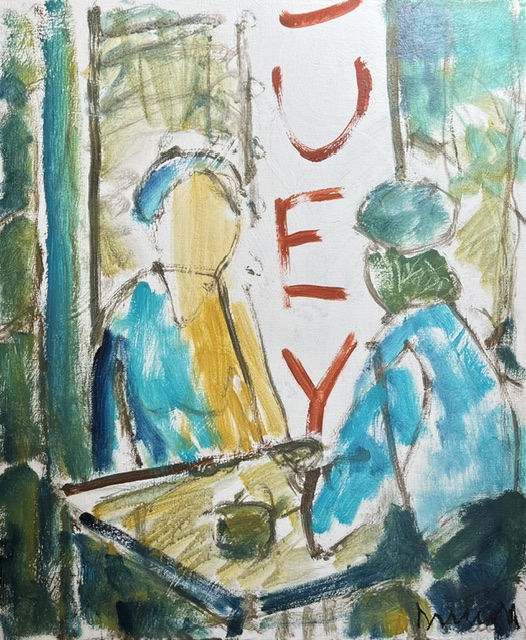
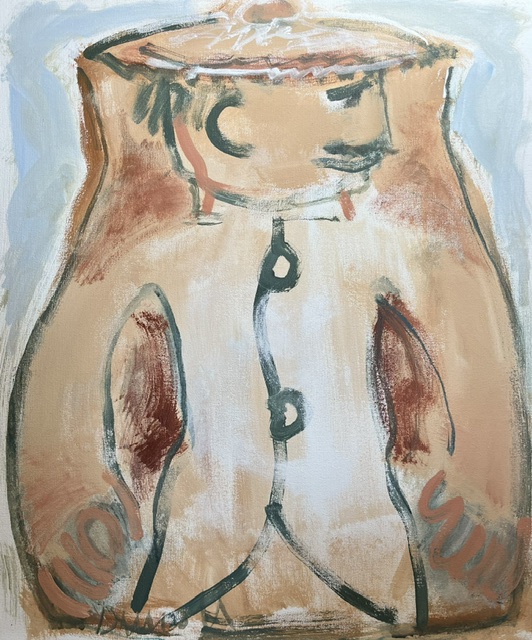
A portrait of Winslow Homer he saw on the cover of a book inspired a more playful work, in which the mustached figure with cap and buttoned-up jacket appears on the surface of a large jar; the painting rhymes with a Picasso-influenced painting in which a face is inscribed on a vase. Neil says one inspiration was folk 19th-century wine jugs that have a face.
After examining some sketches of trees by Cezanne and noticing how the branches crisscrossed, Neil employed the motif himself, making a painting with a pair of crisscrossing branches on which a bird perches; the spare image, consisting mostly of white space, suggests Japanese Zen painting.
One of the more unusual images amid the paintings of landscapes and figures is an enormous apple core, laid on its side. An apple core was lying by his easel, and Neil says the idea to paint it was partly inspired by the pop art of Claes Oldenburg, from the 1960s, in which mundane objects such as toothpaste tubes and erasers were translated into monumental sculptures.
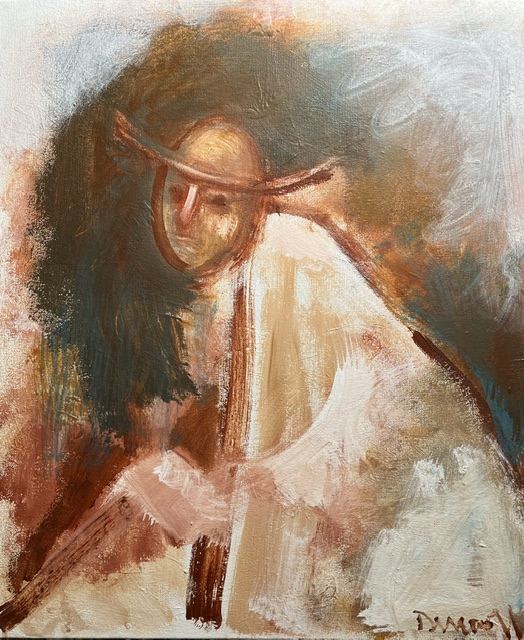
For 43 years Neil and his wife have run a gardening business from their home in Schoharie County; his recent retirement has freed up more time for painting. A clue that this is a pressing priority is his painting of a robed figure in white, seated against a dark background. “It was meant to be a figure telling me time is passing and you have 10 more years to live,” says Neil, noting the somberness of the image is partly attributed to the limited the palette of two colors, burnt sienna and blue. He placed it near the entrance to the exhibit, as a reminder. The collective, exuberant energy conveyed in his 57 paintings not only demonstrate he is making the most of that time, but indeed, might outlive and outpaint his own prediction.
 Longyear Gallery Upcoming News and Events
Leave a comment