
by Lynn Woods
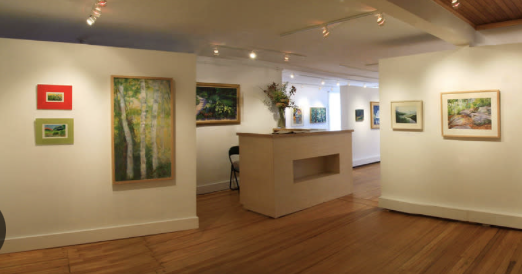
Galleries tend to come and go, which makes the legacy of Longyear Gallery rather extraordinary: Its sign has graced Margaretville’s Main Street for nearly 20 years, since 2007. The gallery is located in a rambling wood building that had originally housed a department store back in the 1920s, or maybe even earlier, and it was the building, known as the Commons, that first captured the fancy of Brooklyn-based architect Frank Manzo and his wife, Laini Manzo, an artist. The couple owned a weekend house in nearby Roxbury, which had familiarized them with the area. They purchased the Commons after the owners had tried unsuccessfully to auction it off, renovated the space, and two years later opened the gallery on the second floor.
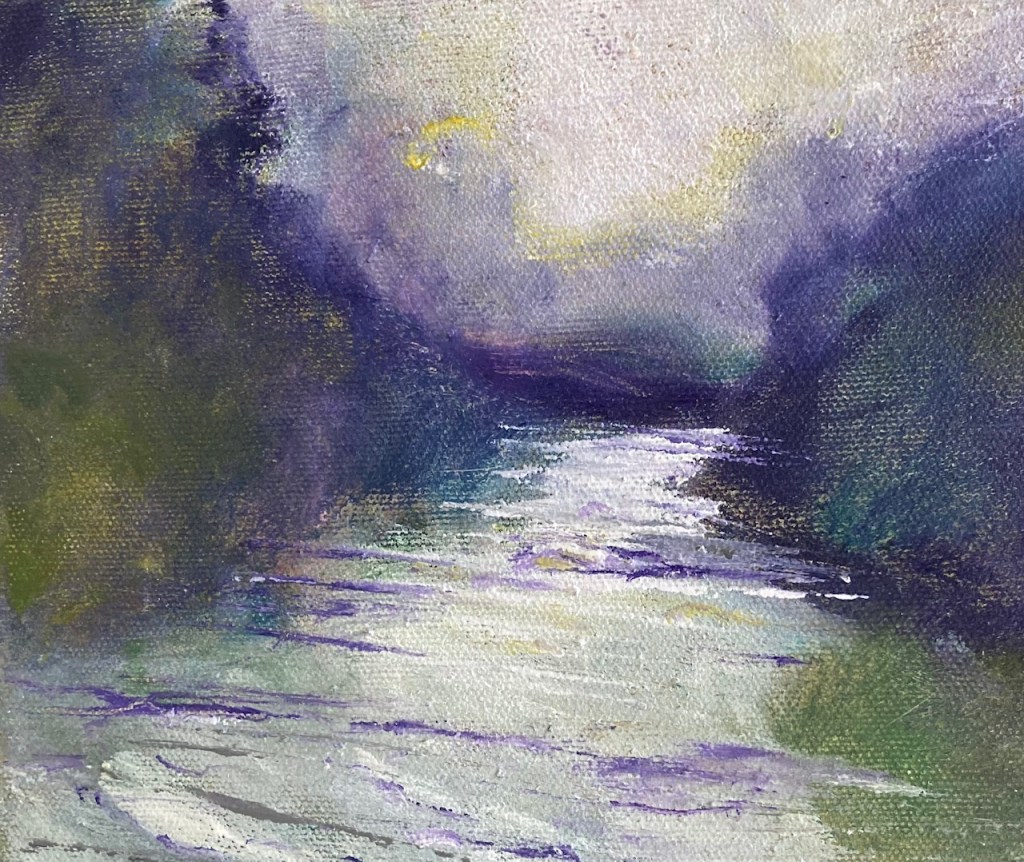
Laini, who is primarily a printmaker, was a member of Blue Mountain Gallery, a co-op gallery then located in Soho (it’s now based in Chelsea), which served as a model for the new gallery. She had joined Blue Mountain at its beginnings in the early 1970s. While raising six children in Park Slope, which was then an affordable neighborhood, she made her prints out of a studio she rented over a garage, paying for the rent by providing art lessons to children after school. “I didn’t have a press for a long time and asked everyone I knew if I could use their press,” she said. When her children were in college, she attended the Vermont Studio Center and she and Frank bought their house in the Catskills.
One of the first people she contacted upon starting the co-op gallery in the Commons was fellow Blue Mountain Gallery member Meg Leveson, a painter and close friend who also lived in Park Slope and was a parent. Meg had worked as a curator in a gallery at Vancouver before moving to New York, had earned an MFA from Brooklyn College, met her husband, David Leveson, a geology professor at Brooklyn College, and traveled for a year on his sabbatical. In 1977, the couple had bought a historic property in Arkville, which was part of a former art colony and included two studios. To locate members for the co-op, she and Laini “kept looking at new work and picked up some good painters—principally doing the same things we do now,” she said. “There were definitely a lot of artists living in the area when we founded the gallery, much as there are now.” One resource was a book listing artists based in Delaware County, which Laini perused, contacting those based in Margaretville.
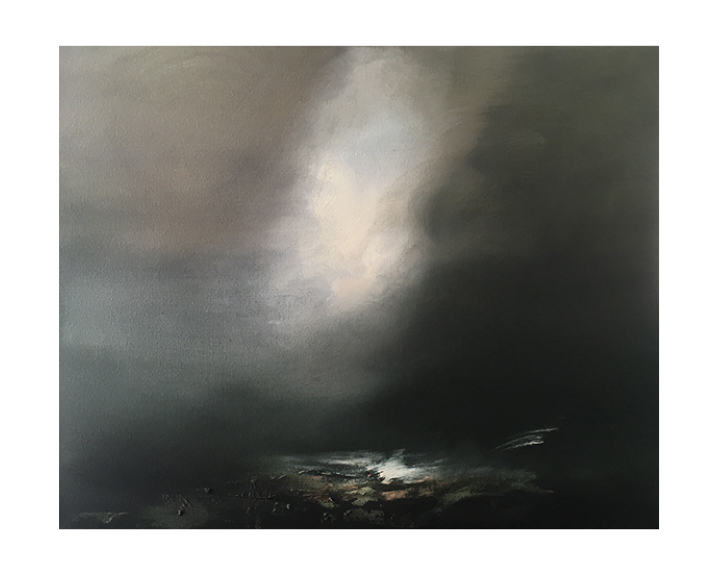
Another early member was Ann Lee Fuller, who had been showing at Roxbury Arts when she got a call from Meg inviting her to join the new gallery. “Known for my big skies,” as she put it, Ann Lee is a painter who with her husband, Stuart Fuller, then owned a loft in Chelsea and a weekend place near Denver. Initially, when they acquired their 10-acre rural property many decades ago, Stuart, who worked for Phillip Morris, and Ann Lee, who had a graphic design business, “wanted to escape and recharge,” although over the years they connected with the community upstate and “started feeling at home,” Ann Lee said.
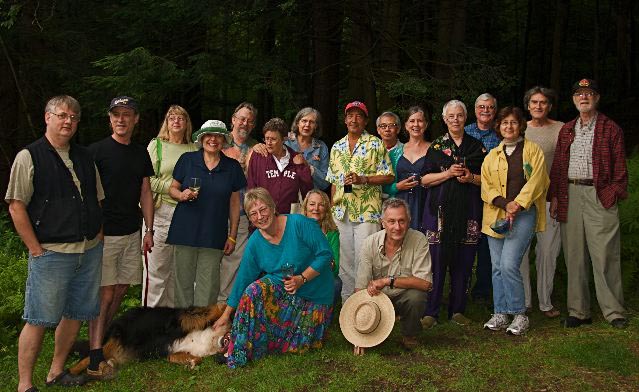
“At our first meeting, whoever showed up and paid their $200 got in,” she noted. Nat Thomas was the first director, followed by Phyllis Horowitz, who took on the business management, who in turn was followed by Gerda van Leeuwen, and then Meg’s husband, David Leveson (who was followed by current director, Wayne Morris). In the early days of Longyear, the members were “an intimate group and we were really happy about selling each other’s work,” Ann Lee recalled. “We capped our membership at 25 people, and it became difficult to get in.”
Meg, who as noted had a curatorial background, hung a lot of the shows with first director Nat and continued to do so after he dropped out. David showed his geological photographs at Longyear, and Meg did all the scheduling until David’s passing in 2018. Laini also helped hang the shows.
Longyear Gallery was popular from the beginning. After the owner of the Homegoods store on the first floor of the building sold her business and moved away, architect Frank redesigned and reconfigured the space, including the backroom extension, which had originally been part of the kitchen store, and the gallery moved downstairs. “We had to renovate on our own dime. Frank managed the project and lent us the money to do it,” said Ann Lee. The only negligible feature was the lack of sufficient heating (which is provided by a noisy electrical heater installed on the gallery ceiling). Revamping the heating system would have cost a fortune for such an old building and was beyond the couple’s budget.
Laini and Frank sold the building, which needed a new roof, four years ago. The terms of the sale to the new owner included language about keeping the rent reasonable, Laini said. Today, the cultural scene in Margaretville “has gotten a lot more impressive,” with several galleries and a gourmet grocery store, Ann Lee noted. “In the early days of the gallery we had classes, partly because a lot of members were art teachers. We used to publish articles in the Catskill Mountain News, which were written by Phyllis. We’re working harder now to advertise.”
Due to Frank’s health issues, Laini is no longer a member and is mostly based in Brooklyn. Meg is also spending most of her time in her house in Brooklyn, which she shares with her daughter and grandchildren. In 2011, the Fullers sold their loft in the city and bought a house in Vero Beach, Florida. Until last year, they also owned a gallery in Vero Beach, The Other Half Gallery, exclusively showing the work of friend artists from the Catskills, including Longyear, of course. Longyear currently has 34 artists and, as we all know, is still going strong.
 Longyear Gallery Upcoming News and Events
Leave a comment